Single conversion from 33 kV to the rack removes rooms, losses and a fire risk, and lets density change without new panels.
A conventional data centre converts power several times between the grid and the processor. Medium voltage is stepped down by a transformer, rectified and inverted again by a UPS, distributed as alternating current and finally converted to direct current inside each server. Every conversion loses energy as heat, and every one of those losses has to be removed again by the cooling plant.
One conversion instead of several
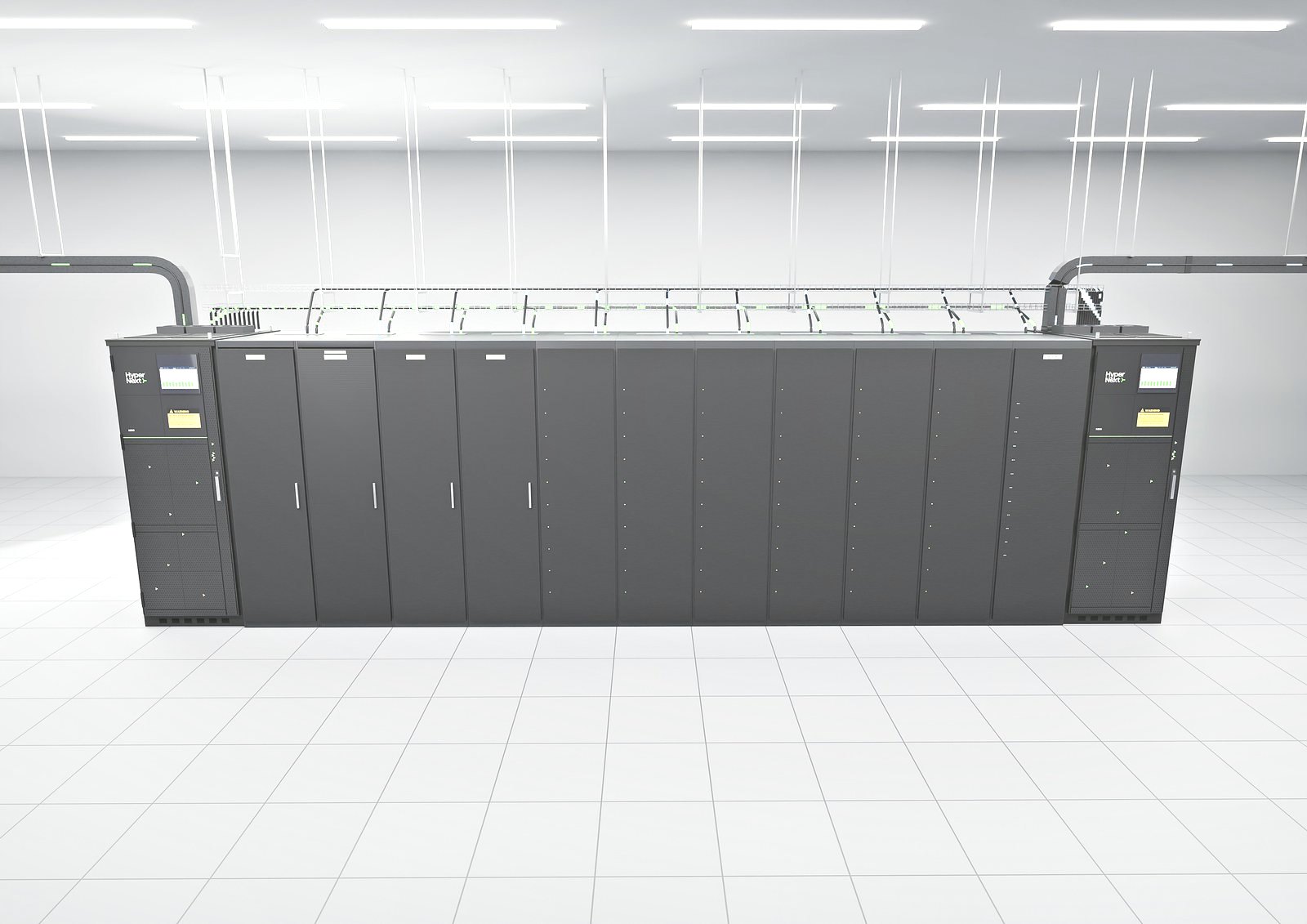
In an 800 VDC architecture, power arrives at 33 kV and is converted once, through a medium-voltage solid-state transformer, to 800 VDC that runs directly to rack power panels. Ride-through is provided by battery modules on the DC bus at the rack, so there is nothing to transfer when the grid is interrupted. The UPS room, the central battery room and the conventional transformer all disappear from the drawings.
The consequences reach well beyond efficiency. Rooms that once held UPS systems, batteries and their panels can take up to 55 per cent of the grey space in a conventional plan. Removing them returns that area to the building, removes a significant fire risk from the core, and lowers the cooling load because less heat is generated in the first place.
Density without rewiring
The most valuable effect for an owner is flexibility. When the distribution chain is sized for the hall rather than for the first tenant, a rack signed at 10 kW can grow to 600 kW without a new panel, breaker or cable, and without downtime. The limit becomes the power envelope of the hall, not the hardware installed on day one.
Servers that still need alternating current are not excluded. They run on in-rack DC-AC shelves, and when they are replaced by DC servers, only the shelf module changes.
What it means for design
- Electrical packages are drawn around single conversion, with earthing on its own sheets as always.
- Grey space is planned without UPS or battery rooms from the concept stage.
- The feasibility model compares AC, 800 VDC and mixed halls on the client’s own numbers before the choice is made.
800 VDC is not the answer for every building. It is, however, the option every owner of a high-density project should see priced before the architecture is fixed.