
PS800
Converted once, in the rack.
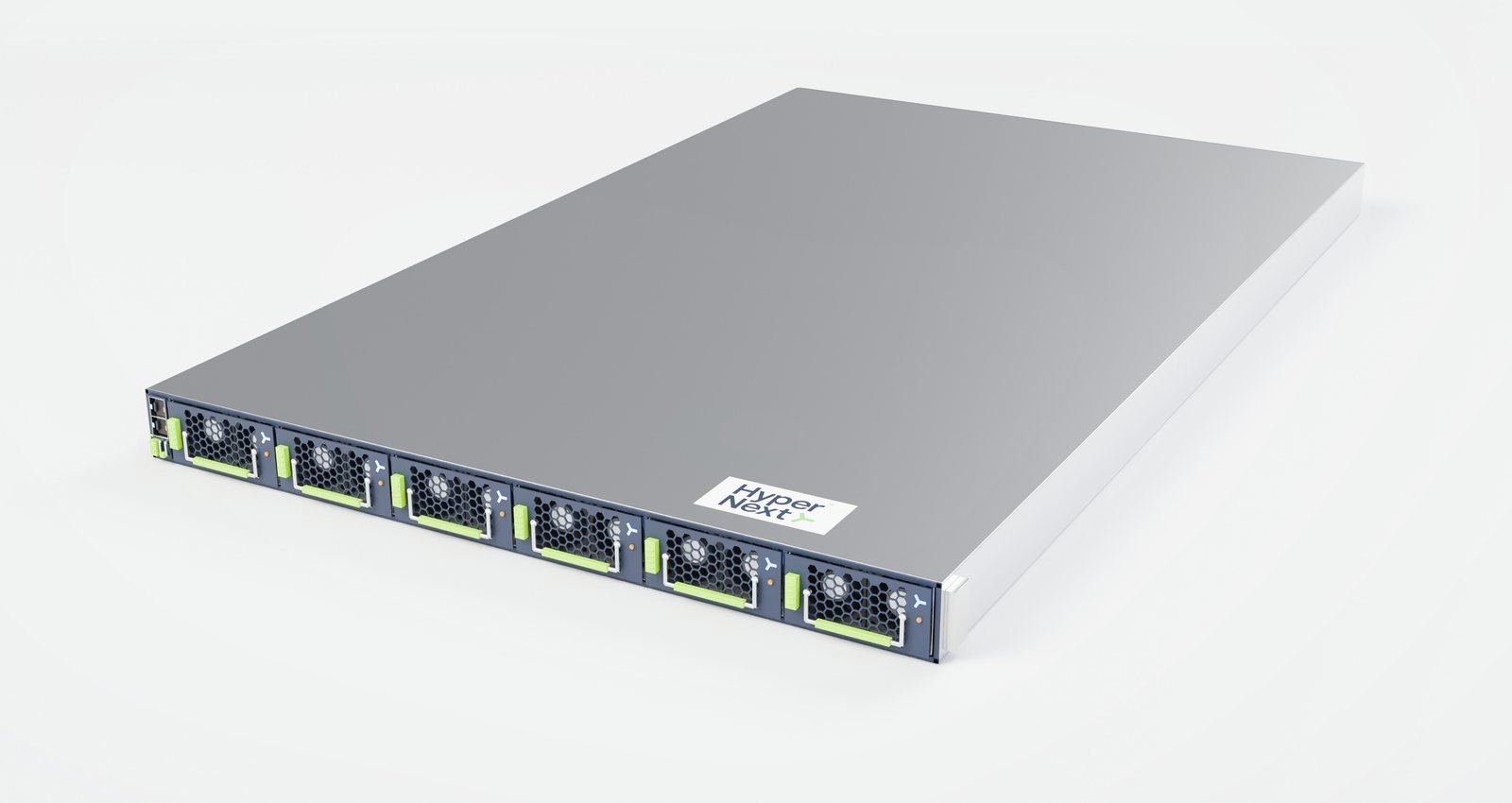
Power has taken the long way into the rack for long enough. PS800 takes 800 volts direct current to 50 volts for accelerated compute trays, or straight to 230 volts alternating for equipment that has not moved, in one OU.
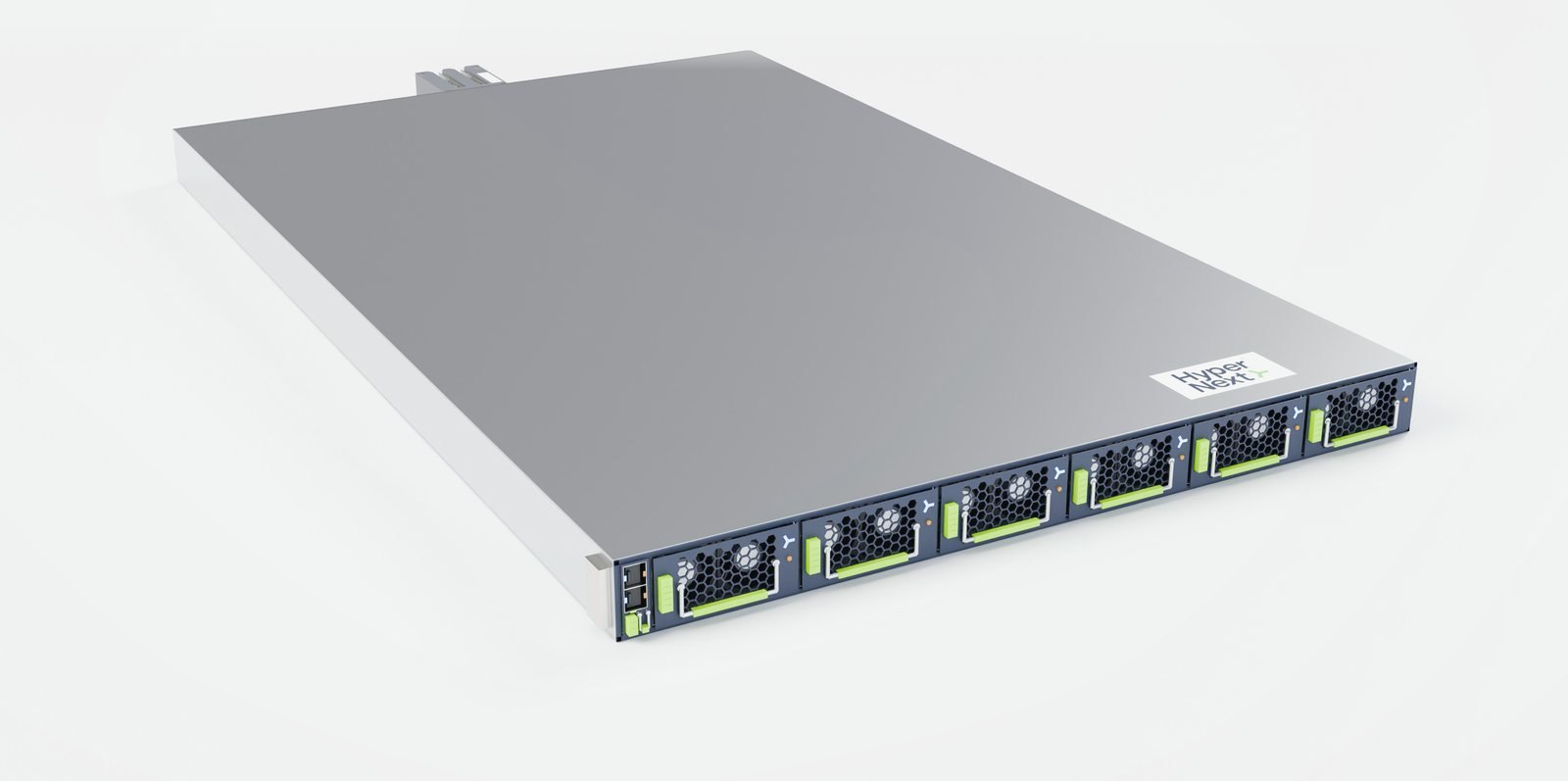
Three shelves. One chassis.
Every shelf shares one chassis, one PSC-1 controller and one input arrangement. A rack grows by adding modules or a shelf, and nothing upstream changes.
Three shelves
PS800-DD-82
800 VDC to 50 VDC
- N+1 output
- 82.5 kW
- Modules
- Six PM-D165
- At N+0
- 99 kW
- Output
- OCP rack busbar, 2,000 A clip
- Whip
- W125Y, 125 A
PS800-DD-50
800 VDC to 50 VDC
- N+1 output
- 49.5 kW
- Modules
- Four PM-D165
- At N+0
- 66 kW
- Output
- OCP rack busbar, for lighter racks
- Whip
- W064Y, 64 A
PS800-DA-37
800 VDC to 230 VAC, 50 Hz
- N+1 output
- 37.5 kVA
- Modules
- Six PM-A75, isolated
- At N+0
- 45 kVA
- Output
- Three 63 A, IP54 cord grips
- Whip
- W125Y, 125 A
Modules and controller
- PM-D165
- 16.5 kW DC to DC module. Gallium nitride at 500 kHz, hot-swap, OCP module form factor
- PM-A75
- 7.5 kVA DC to AC module. Isolated in one step, hot-swap, same form factor
- PSC-1
- Shelf controller common to every shelf. Hot-swap, with Redfish, SNMPv3 and Modbus
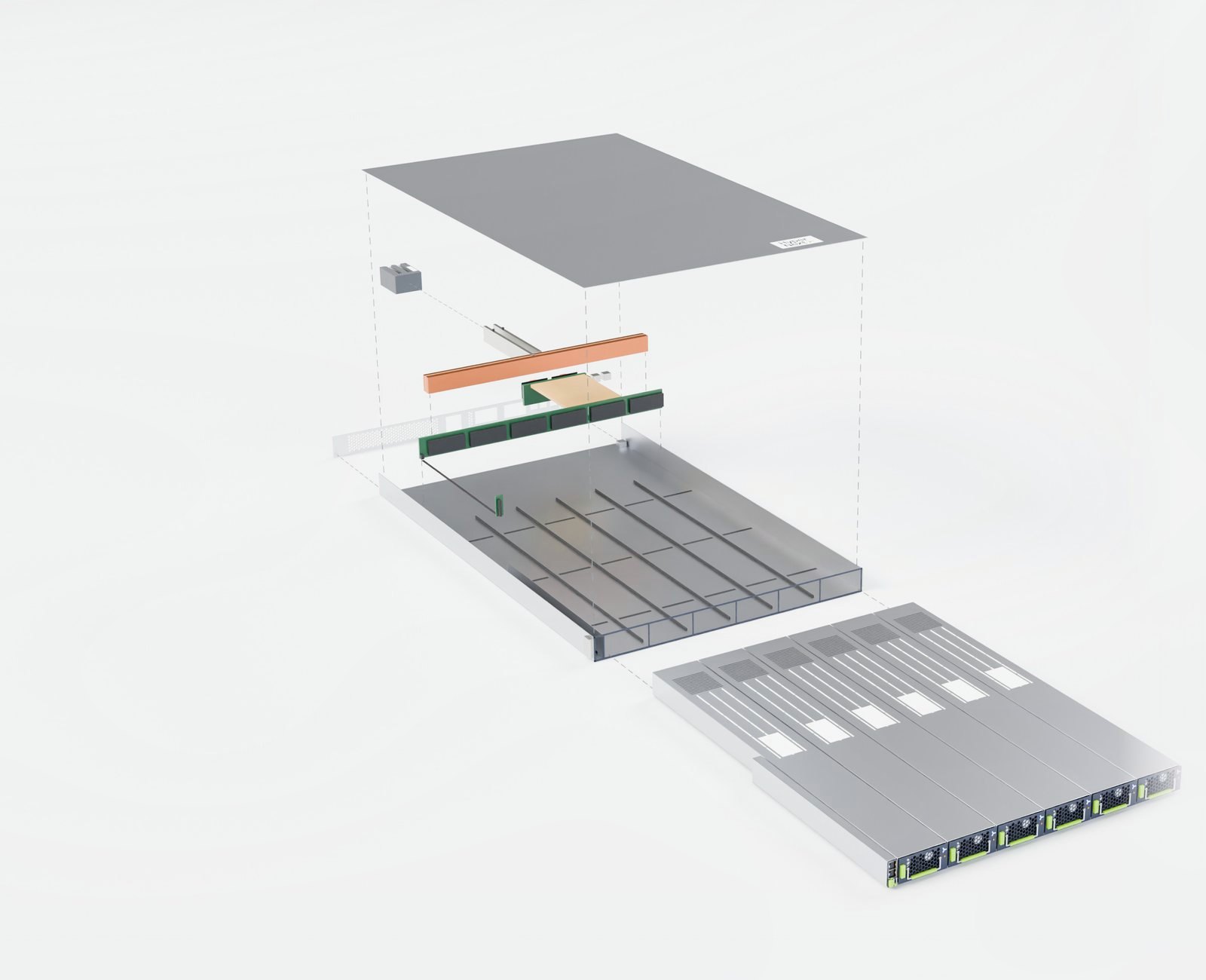
Built to come apart · cover, modules, backplane, output laminate, busbar clip
82.5 kilowatts in one OU.
Eight hundred volts in at the rear from two Open Compute six-pin inputs on a single Y-whip, fifty volts out onto a 2,000 ampere floating busbar clip.
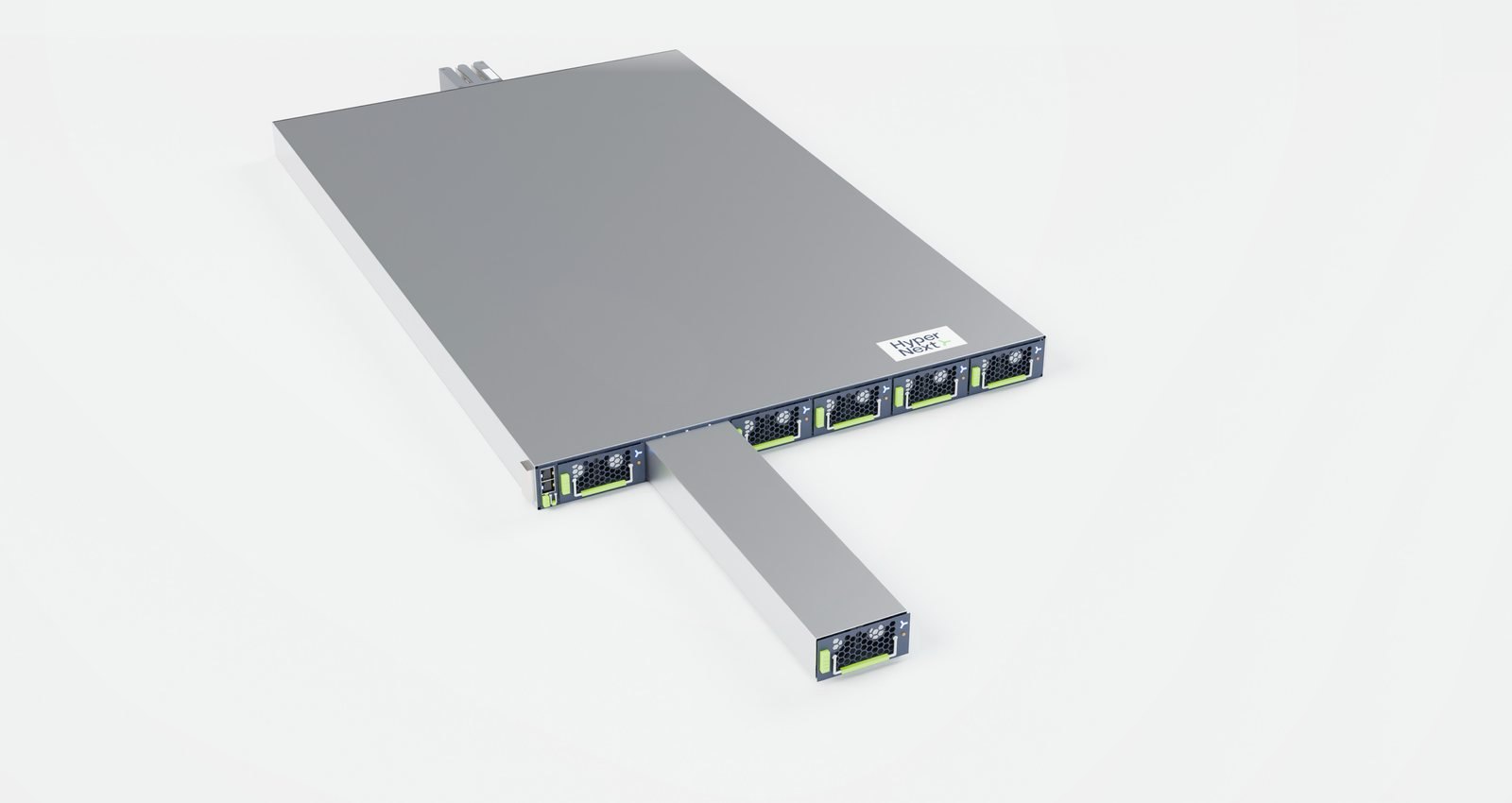
Hot-swap from the cold aisle
Each module slides out from the cold aisle. A short pilot pin breaks first and turns the module off within a millisecond, before its power pins part. At the rear the sense pins make last and break first, so the input never opens under load and there is no spark on connect or pull.
Ratings are at 800 VDC input and 35 °C inlet. The input accepts 700 to 880 VDC, ±400 V with a midpoint return, and withstands 1,000 V for 100 milliseconds.
Half a megahertz, in copper.
The reason to switch fast is magnetics. A transformer moves a fixed amount of energy per cycle, so running it at half a megahertz means the same power through a fraction of the iron, and the magnetics are what set the size of any isolated converter.
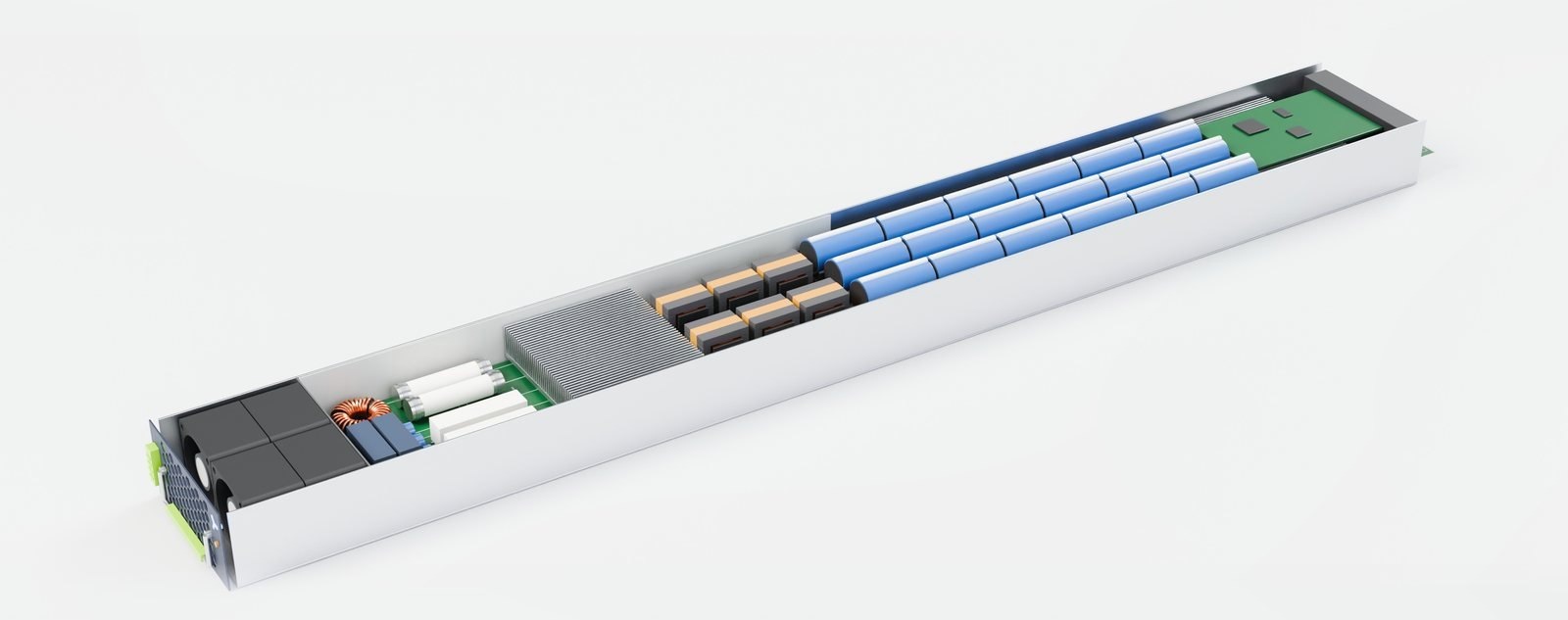
PM-D165 · 16.5 kW, cover off
PM-D165
- Topology
- Two three-phase interleaved LLC cells, input in series and output in parallel. Interleaving cancels most of the output ripple current
- Switching
- 650 V gallium nitride primary switches at 500 kHz with zero-voltage switching. 80 V synchronous rectifiers on the 50 V side
- Magnetics
- Twelve planar transformer cores wound into a 16-layer, 3 oz power board, with six resonant inductors
- Protection
- Silicon carbide eFuse on both input poles with a 2 µs trip, OR-ing on the output, no-spark hot-swap sequence
- Efficiency
- 98.3 per cent peak, 97.5 per cent guaranteed at full load, at 800 VDC input
- Monitoring
- PMBus to the shelf controller, with a black-box event record in every module
Two LLC cells sit in series at the input and parallel at the output, so each 650 V gallium nitride switch sees half the 800 volt bus. Gallium nitride is what makes the frequency affordable: it has essentially no reverse recovery charge, and reverse recovery is the loss that is paid once per switching cycle and therefore punishes high frequency hardest.
Clean alternating current, from an 800 volt rack.
Most floors still hold equipment that wants 230 volts and will for years. Converting for it in the rack is cheaper than running a parallel alternating current infrastructure through the building.
PS800-DA-37 · three 63 A outputs
A 300 kHz LLC direct-current transformer isolates the 800 volt bus through two planar transformers in a 14-layer board, and a gallium nitride fast leg with a silicon carbide line leg builds the sine wave. The neutral is bonded to protective earth at the shelf, which gives a clean TN-S supply to the rack distribution. With one module out the shelf still delivers 37.5 kVA, and each output relay opens within five milliseconds on reverse power so a fault stays in its own bay.
The numbers.
PS800 shelves
- Input
- 700 to 880 VDC, ±400 V with a midpoint return. Two OCP ORv3 HVDC six-pin connectors on one Y-whip from an R800 cassette
- Output, DC
- 50.0 V at full load, 51.0 V at no load. 300 mV peak-to-peak ripple, 140 per cent for 50 ms
- Output, AC
- 230 VAC at 50 Hz, adjustable 220 to 240 V. 2 per cent THD on linear loads, 4 per cent on non-linear
- Efficiency
- 98.3 per cent peak DC to DC, 97.5 per cent guaranteed at full load. 98.0 per cent peak DC to AC, 97.7 per cent guaranteed
- Protection
- Silicon carbide eFuse per module on both poles, 2 µs. Input current limited to the cassette rating. No-spark input interlock
- Isolation
- Reinforced between 800 V and every output, type-tested at 4,240 VAC for 60 s
- Cooling
- Rated at 35 °C inlet at sea level, 30 °C at 3,050 m. Two dual-rotor fans per module, back-draft flap behind a stopped fan
- Size
- 1 OU, OCP ORv3 form factor, 537 × 46.2 × 867.5 mm, 21 inch native
- Management
- Redfish, SNMPv3 and Modbus. Secure boot and signed firmware. PMBus to every module
The rest of the line
Talk to the engineering team.
Specifications, drawings and deployment planning for the 800 VDC product line. Designed by HyperNext Engineering, Toronto. Made in India.