
Built, not
bought.
Four products carry power the last hundred metres of a HyperNext campus: the panel on the floor, the battery inside it, the shelves in the rack and the rack itself. All four are 800 VDC native, designed by HyperNext Engineering and made in India.
From the substation to the server.
Medium voltage arrives, is converted once, and runs as 800 VDC all the way to the rack busbar. The four products in green are ours.
There is no uninterruptible power supply room in this chain and no alternating current conversion between the transformer and the rack. The battery sits in the panel beside the load it protects, and the last conversion happens at the top of the rack rather than at the end of the row.
Four products you can bolt to a floor.
Each is designed for manufacture, specified against Indian standards at the highest grade each offers, and built from components on the HyperNext approved brands register. Vendor-neutral by design.
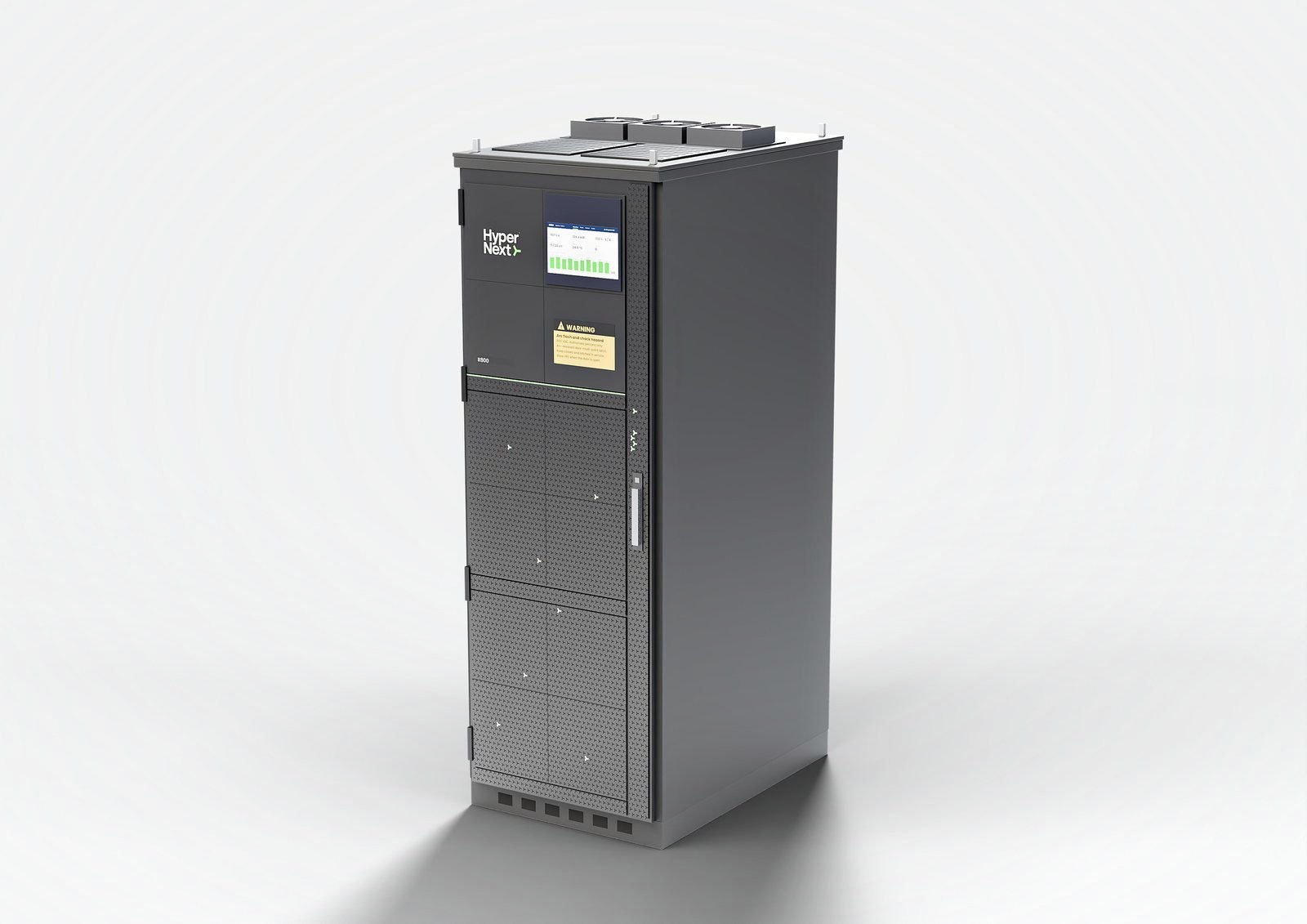
R800
Two 630 A incomers, twelve plug-in cassettes, twenty four protected rack outputs and the battery behind the same door.
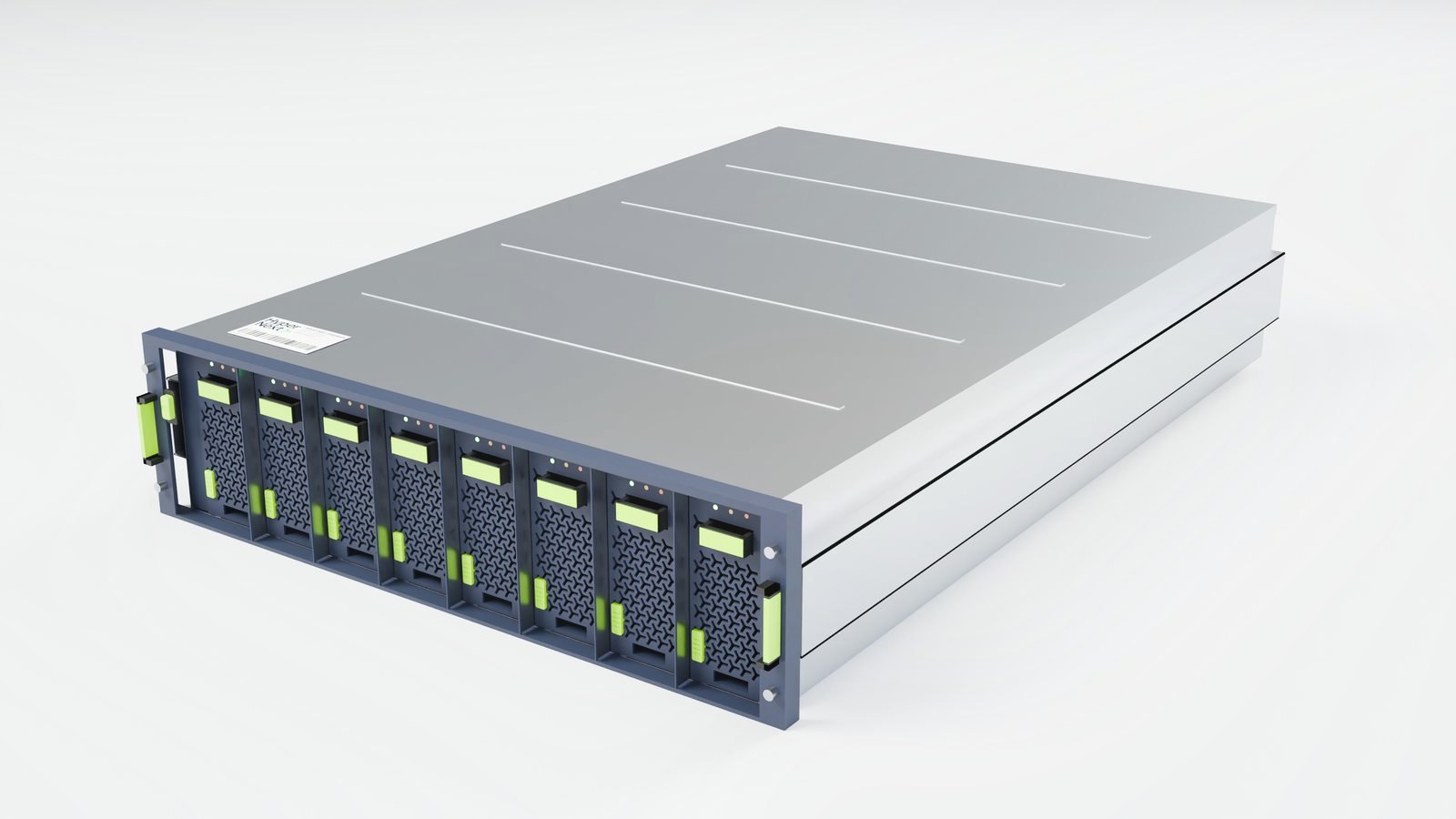
BU800
A 4RU drawer holding 100 kW at 800 VDC across eight hot-swap lithium iron phosphate modules. No battery room.
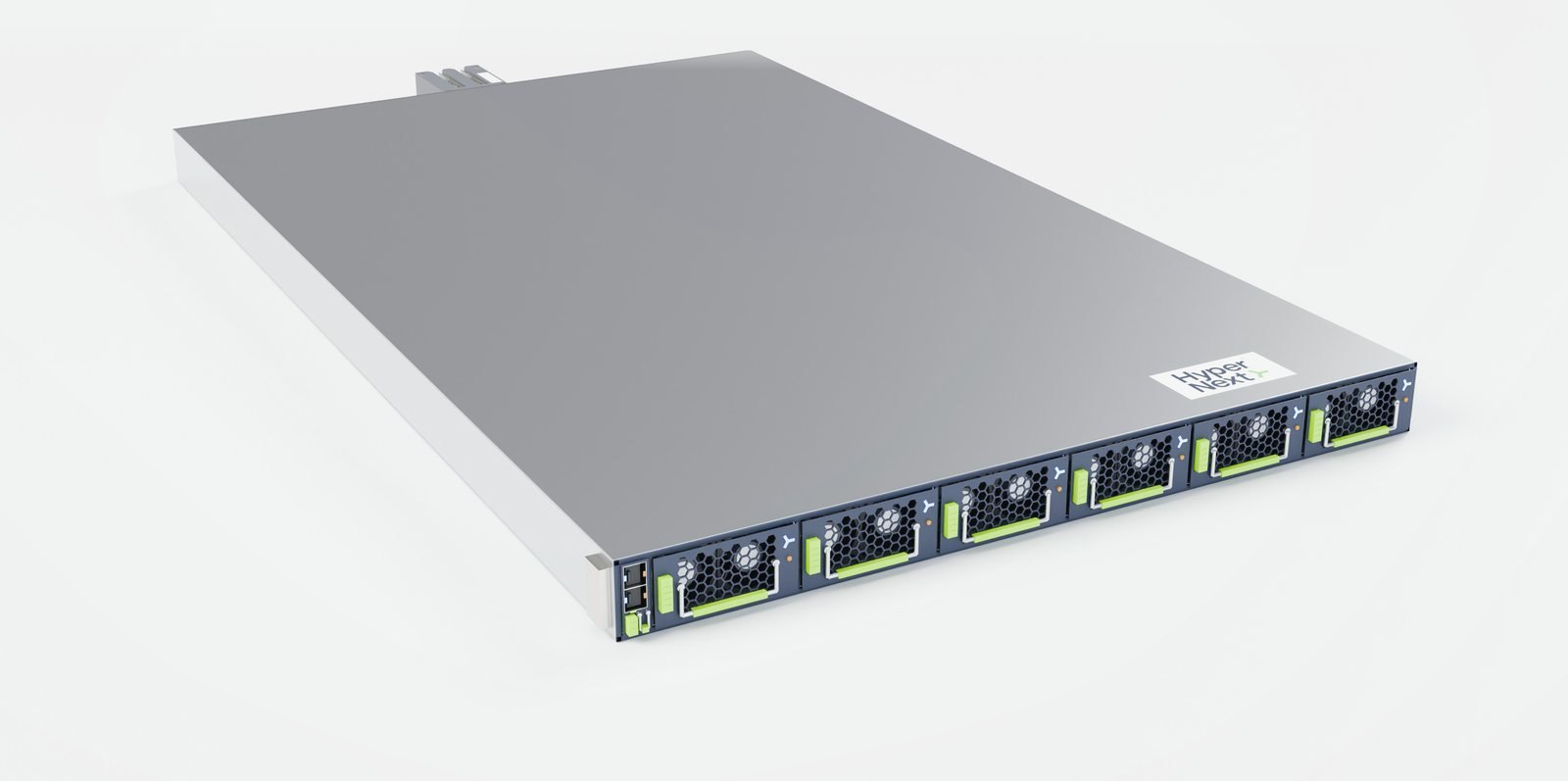
PS800
One OU, Open Compute form factor. 800 V to 50 V for accelerated compute, or straight to 230 V for equipment that has not moved.
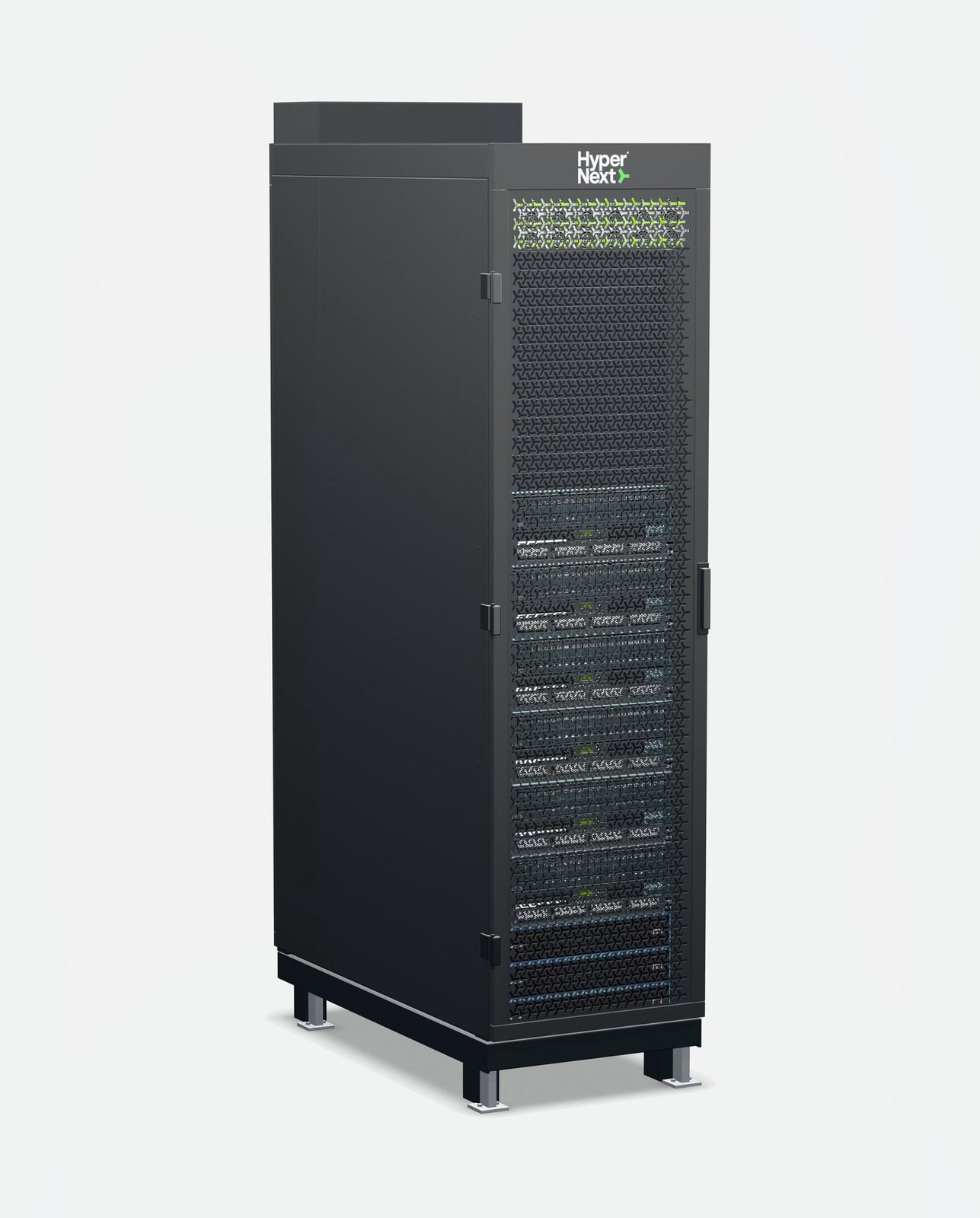
R600
One welded frame carrying 2,200 kg, four models and a kit system that converts a rack from storage to accelerated compute.
Four products you can log in to.
Software HyperNext wrote and operates from its own campuses, with controllers, logs and keys in India and the HyperNext SOC watching all of it. Offered to tenants, enterprises and hyperscalers as a service.
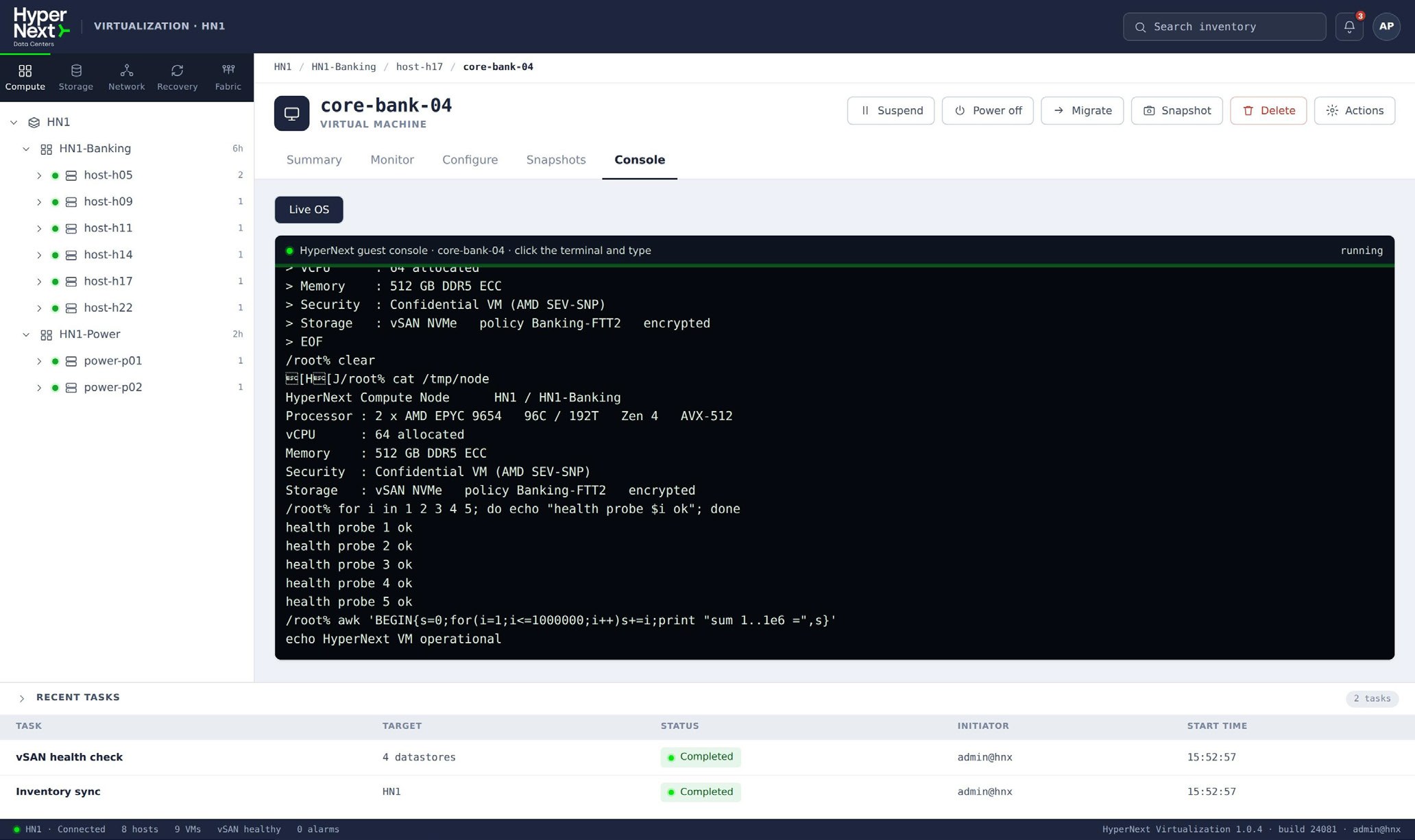
VNext
The platform under Hyper 7 Cloud. Hardened KVM, a control plane HyperNext wrote, our own distributed storage, two consoles and a VDI module. No per-socket tax.
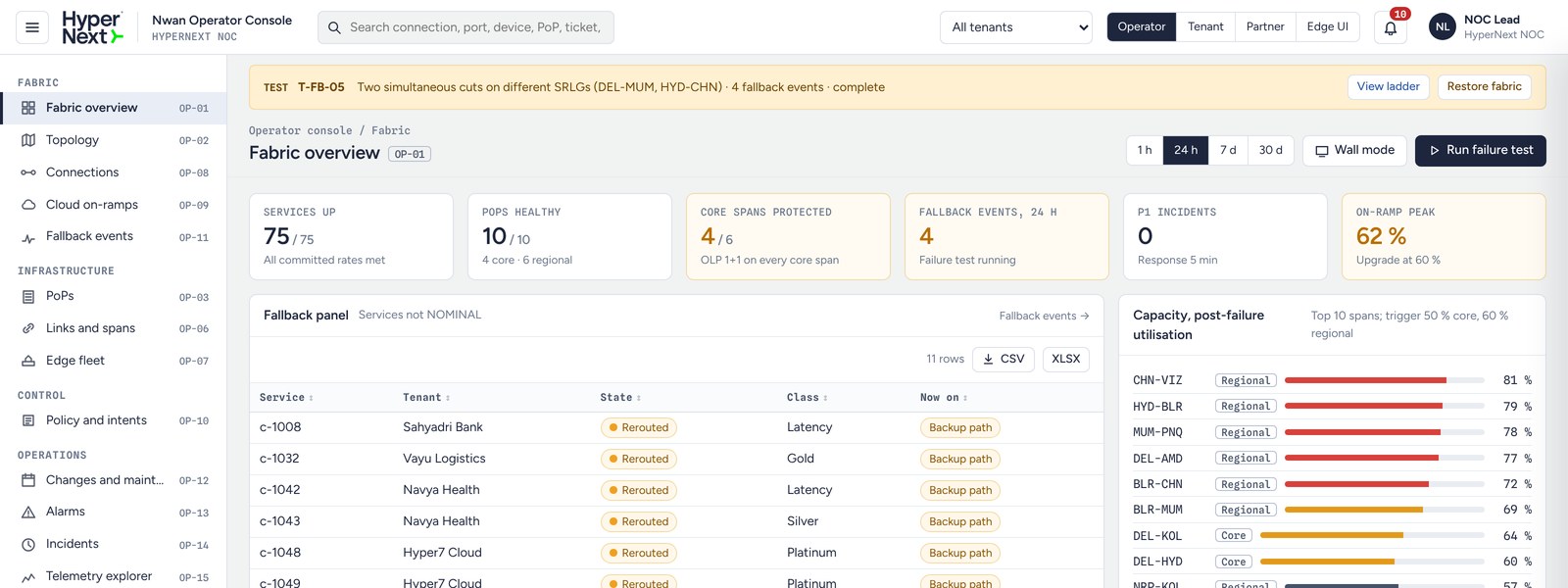
Nwan
One fabric, one control plane and one bill. Nine levels of fallback under one supervisor, proven path diversity, cloud on-ramps in minutes. Nwan 1.0 in March 2027.
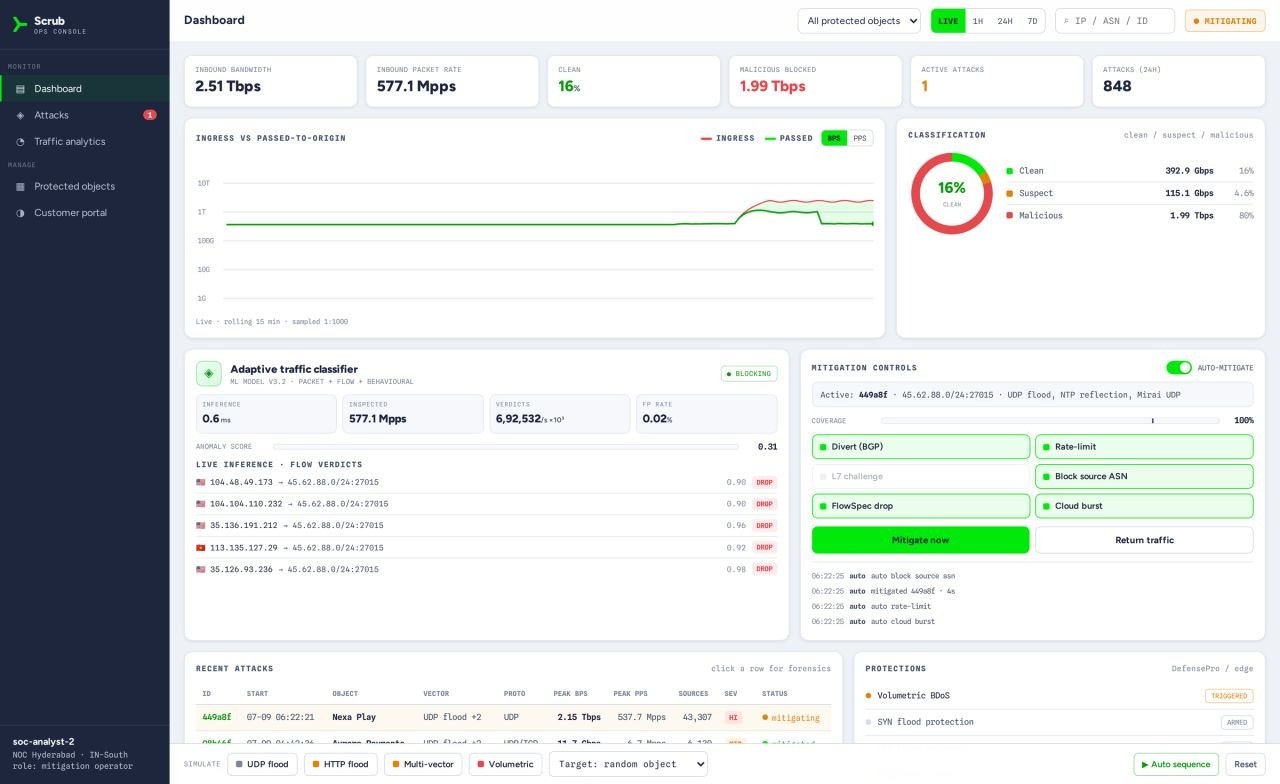
Scrub
Autonomous mitigation at line rate. Detection to clean return in under sixty seconds, every packet inspected inside India, watched by our own SOC.
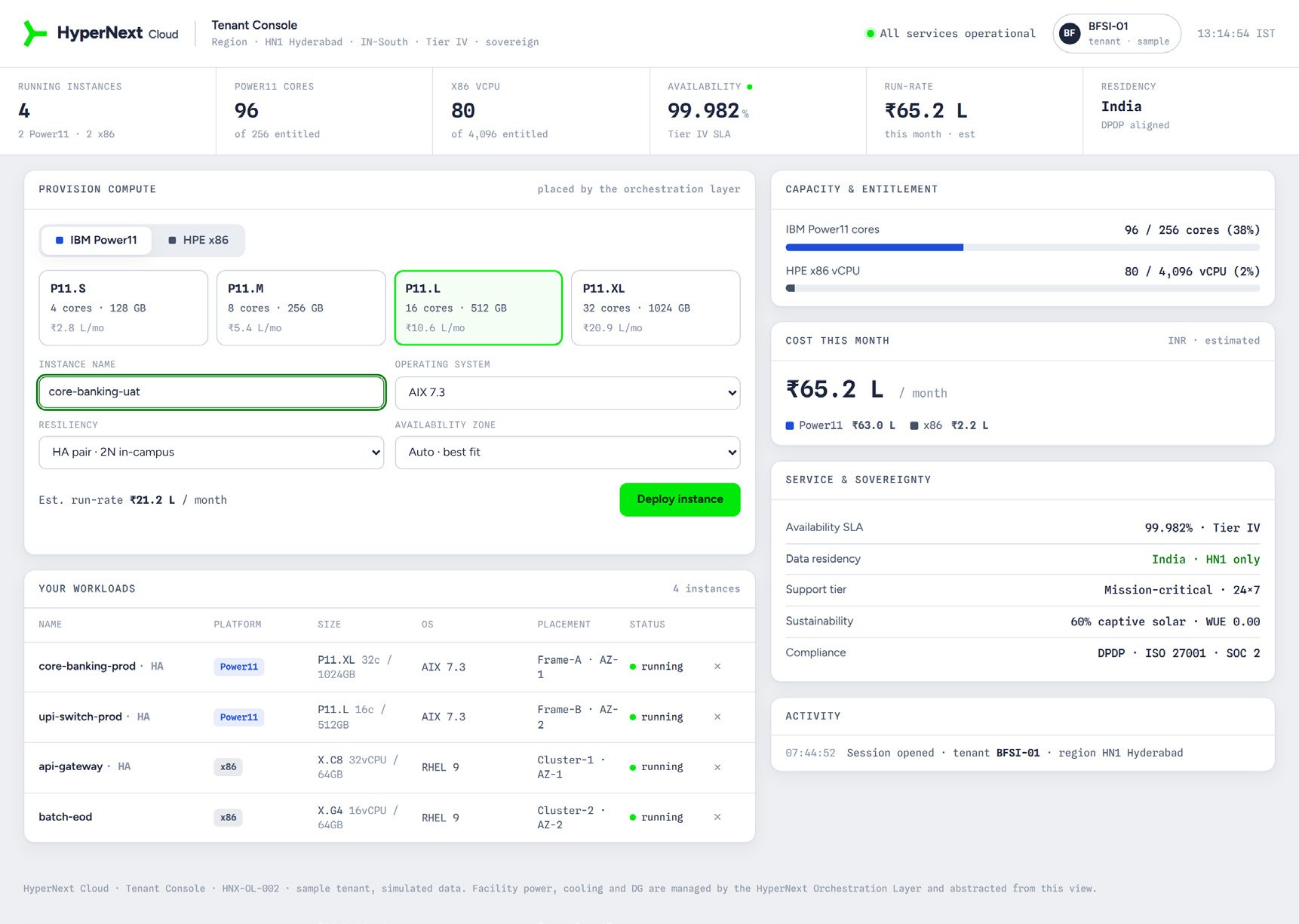
Drop
Recovery as a service across the Nwan fabric to HN-3 Nava Raipur. Rehearsed on a schedule, with the evidence kept for your regulator.
Because nobody sells this yet.
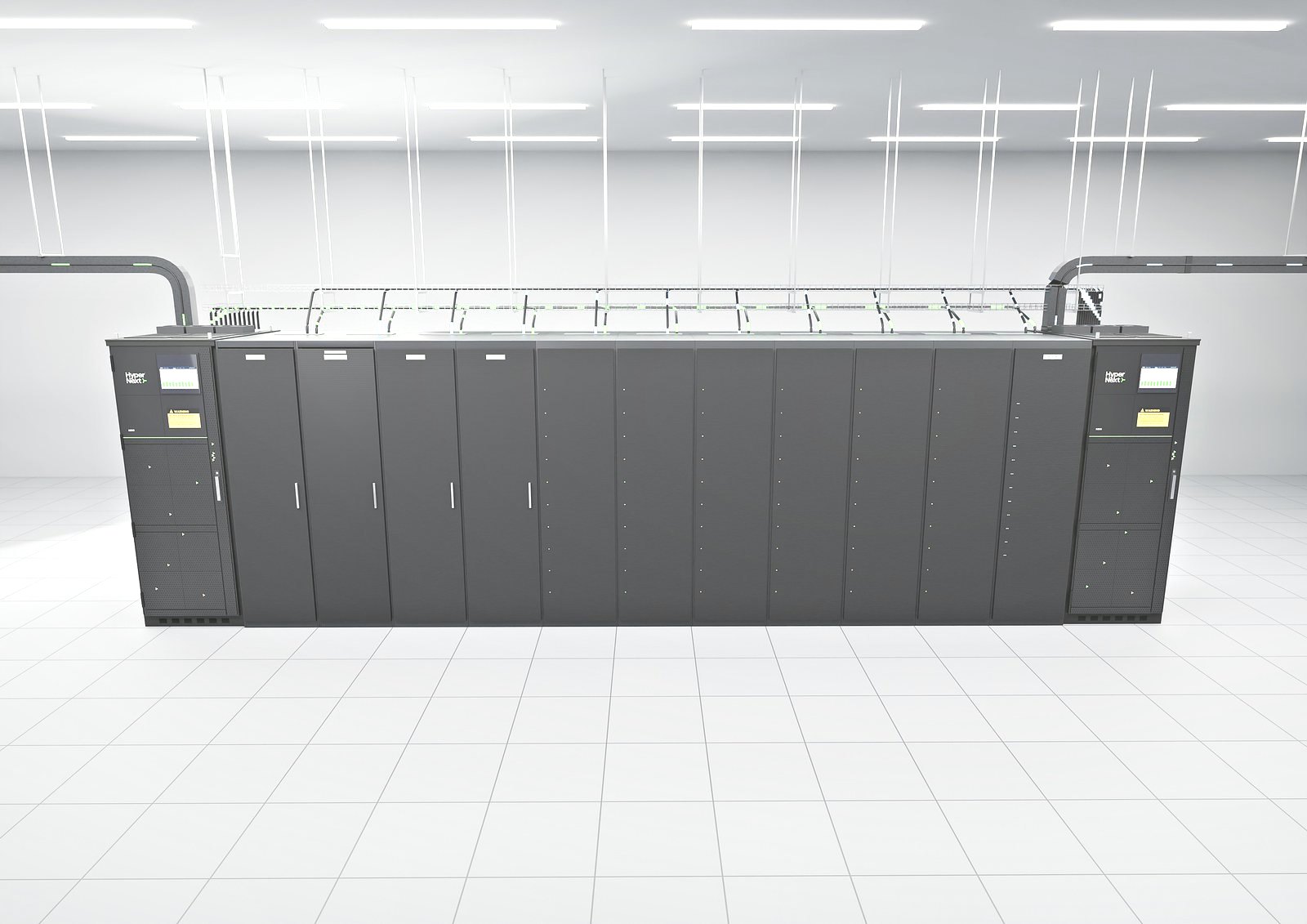
R800 · one row, two paths
A hall designed around 800 volt direct current needs equipment that does not exist as a catalogue item. The panel, the battery, the shelves and the rack had to be designed together, because the decisions in each one depend on the others: where the conversion sits decides how much copper the rack needs, and where the battery sits decides what it can back.
That is also why the products follow published standards wherever one exists. The connectors, the module form factor and the rack mounting are Open Compute and EIA. Only the parts nobody has standardised yet are ours.
Specified to Indian standards.
Research and development sits with HyperNext Engineering in Toronto. Manufacture, assembly, test and burn-in happen in India.
Standards applied across the line
- Structure
- IS 2062 hot rolled structural steel, E350 C grade, welded
- Seismic
- IS 1893 Part 1, Zone V, top floor
- Earthing
- IS 3043, every touchable part bonded, 0.1 Ω maximum
- Power safety
- IEC 62477-1, IEC 60664-1
- Battery safety
- Designed to IEC 62619, UL 1973, IS 16805
- Rack mounting
- OCP Open Rack V3 and EIA-310-E
- Power interfaces
- OCP ORv3 HVDC, blind-mate, 800 V class
- Management
- Redfish, SNMPv3 and Modbus TCP across the line
Talk to the engineering team.
Specifications, drawings and deployment planning for the 800 VDC product line. Designed by HyperNext Engineering, Toronto. Made in India.