The Responsible
Hyperscaler®
We did not set out to improve the data centre. We set out to rethink it.
AMD Helios,
rackscale.
Helios rackscale runs alongside Vera Rubin, under the same roof, on the same 800 VDC power and the same direct-to-chip cooling.
The way out is
part of the offer.
Where a model was written for CUDA, we move it onto ROCm, tune it, check it against the original, and hand it back. Nothing about the choice is a trap.
Same 800 VDC.
Same liquid cooling.
Instinct MI on the Infinity Fabric interconnect, on the same 800 VDC power and the same direct-to-chip liquid cooling we built for Vera Rubin. No compromise for choosing open.
India's first
Vera Rubin
rackscale system.
Purpose-built for the workloads that ask the most of this decade.
Engineered for
800VDC.
India's first DC built around 800V direct current. Higher voltage, fewer conversions, and a topology designed natively for 660 kW capable AI racks.
NVLink across
the pod.
NVLink fabric across the pod and the CUDA stack above it, filling the Hyderabad campus now, with Vera Rubin Ultra NVL576 to follow.
Prompt in. Tokens out.
Every AI answer is made the same way: your prompt becomes tokens, one forward pass runs across the NVL72's 72 GPUs, and the answer streams back a token at a time. Try it.
HyperNext runs racks like this by the row, generating tokens by the billion on sovereign infrastructure in India. Read the research ›
Fewer things to fail.
More uptime.
An enterprise doesn't buy a data centre. It buys the certainty that its workloads keep running. That certainty comes from what you remove: 800VDC lets us take out the central UPS halls and their rooms of batteries, the single largest fire load and one of the most common points of failure in a conventional facility. Fewer conversion stages, fewer batteries, fewer things between the grid and the chip. The result is a simpler, cooler, more reliable building, and that is the argument for coming to HyperNext.
UPS-free by design
800VDC removes the central UPS halls a conventional AC facility depends on. No double-conversion UPS, no rooms of batteries sitting in the power path. Backup rides at the rack instead. Fewer components between the grid and the GPU means fewer things that can fail.
The largest fire load, gone
Battery rooms are among the most serious fire risks in any data centre. Take out the central battery plant and you take out that hazard, and the suppression, containment and insurance overhead that comes with it. A safer building for the workloads inside it.
Power secured before concrete
330 MW allocated by Telangana State Transmission Corporation. A dedicated substation designed, approved and brought up in 1.5 years. While the industry waits for transmission, ours is already operational.
Same megawatt in.
More compute out.
Two differences. What a rack is allowed to draw, and what it costs to run once it does. The first five rows sell the hall. The last five decide the margin.
Capacity lives on the bus
Power is not committed to breakers when the hall is built. It sits on the busway until a rack asks for it, and a rack asks by tapping. Taking a rack from 60 kW to 240 kW is a tap change, not an electrical project in a live hall.
Why it matters commercially: installed megawatts are not stranded behind the wrong-sized breakers. Power that a departing tenant releases is immediately available to the next one, at whatever density they need.
Mix densities in one row
A 5 kW storage rack, a 60 kW enterprise rack and a 600 kW AI rack can share the same row. In an AC hall one dense rack pulls a phase out of balance and forces rebalancing across the floor. Direct current has no phases, so there is nothing to rebalance.
Why it matters commercially: one hall serves the whole market rather than a single tier of it. Enterprise colocation, sovereign cloud and frontier AI training can be sold into the same footprint.
No density bet at signing
An AC tenancy forces the customer to commit to a density years ahead of the hardware. Guess high and they pay for power they never draw. Guess low and the hall is rebuilt around them. Here they commit to a footprint and a power envelope instead.
Why it matters commercially: it removes the objection that stalls long leases. Customers sign sooner because the decision is reversible, and they grow inside the contract rather than renegotiating it.
The hard parts,
engineered here.
The systems that decide whether a hall runs cool and clean are the ones we build ourselves, prototyped on the bench and put on our own BMS. Two of them are going into HN1 Phase 1.
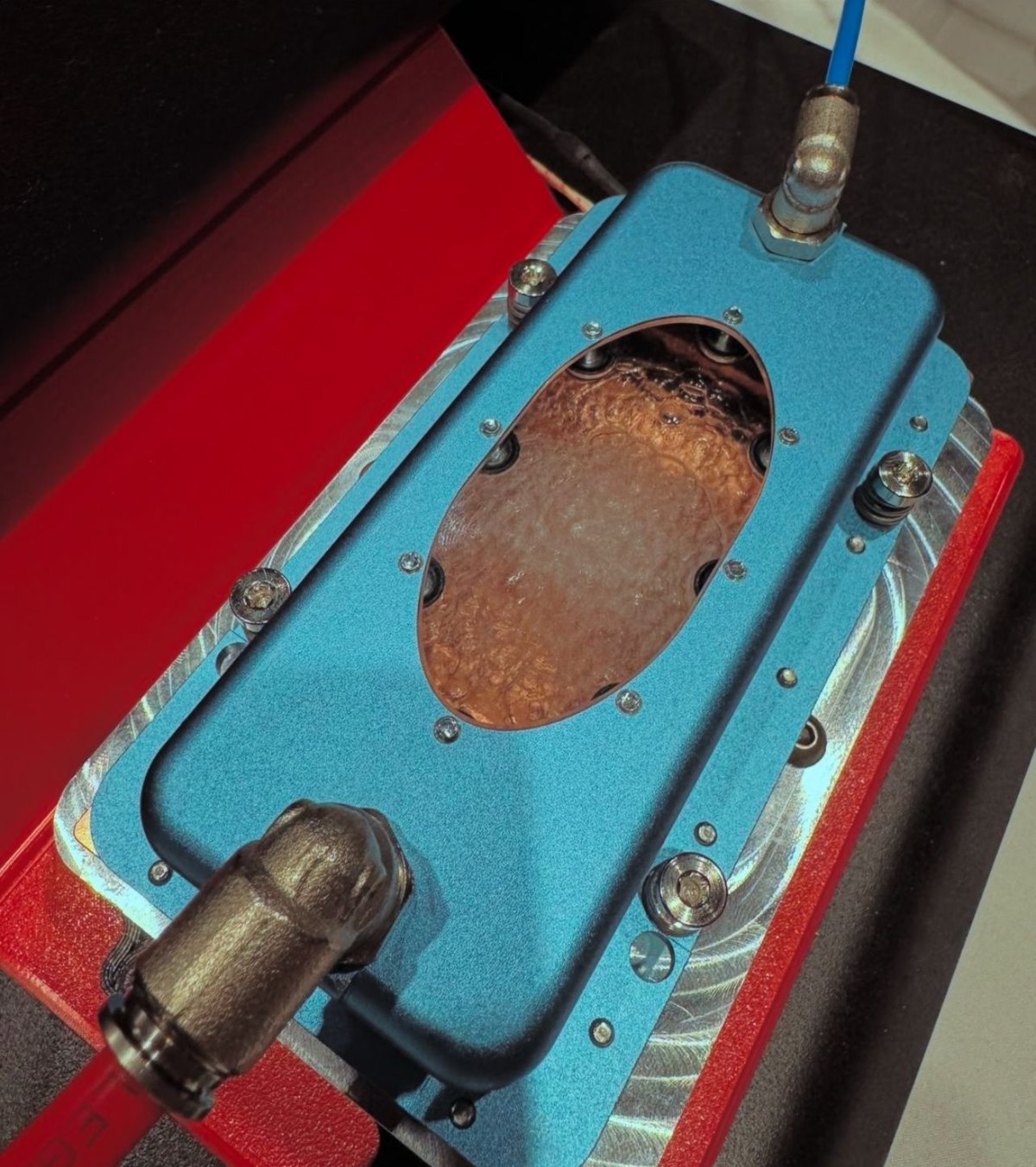
Direct-to-Chip Hybrid Cooling
Liquid where the heat is, air for the rest, and a compact sidecar exchanger instead of an expensive CDU. Cools 1400W chips, retrofits into servers you already own, up to 37% less cooling power.
Read it ›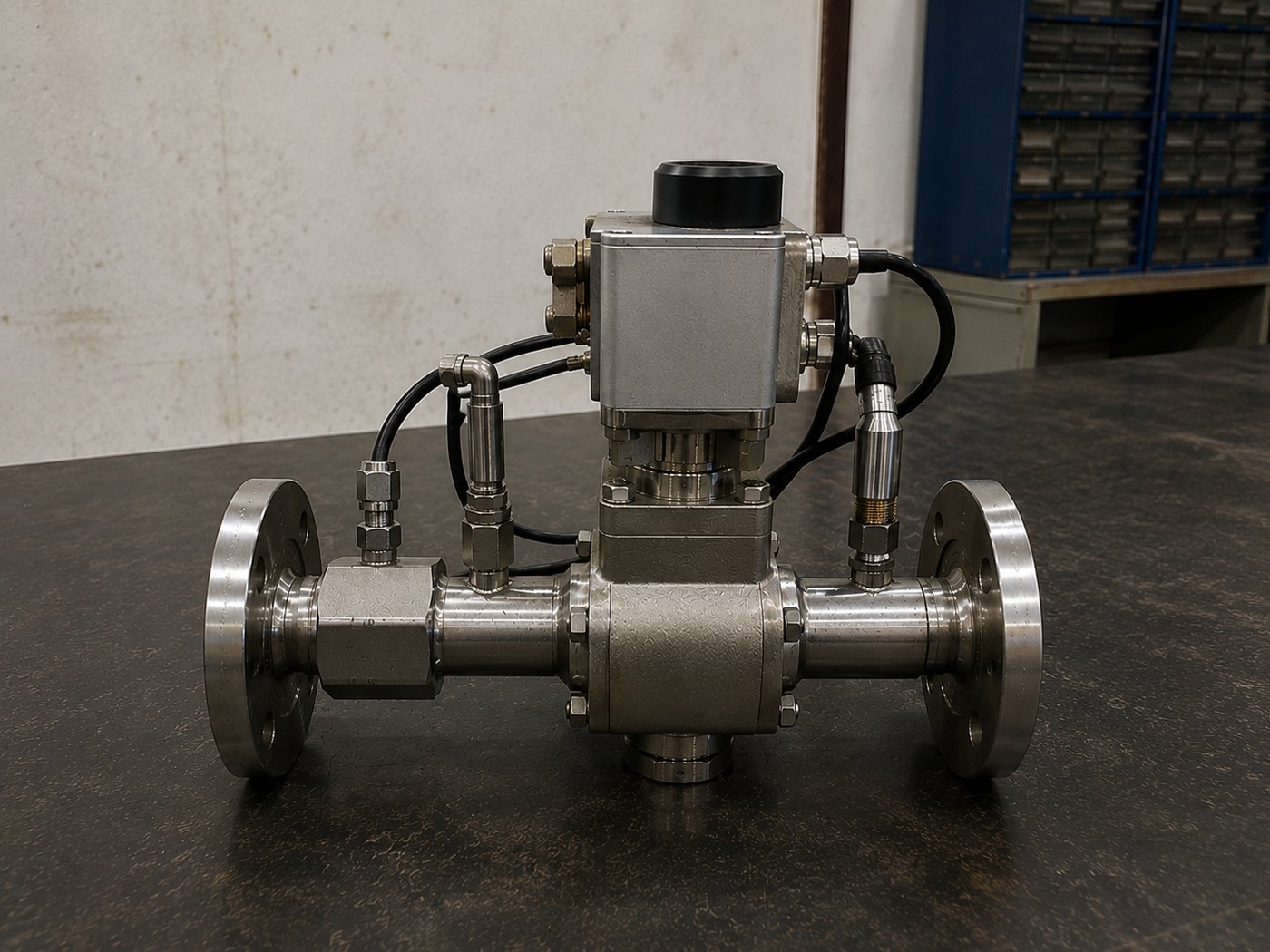
Inline Fluid Quality Valve
An inline valve that reads the dry-cooler coolant as it flows past and projects how many days of life it has left, so coolant is changed on condition, not on a calendar.
Read it ›800 MW of AI cluster,
on the ground.
Eight by two pods at 240 kW a rack, on the 800VDC power and the direct-to-chip cooling we built for exactly this load. It is the first slice of 800 MW of AI cluster we are deploying across the platform, racks that most halls in this country cannot power, let alone cool.
The same capacity, tuned to the workload that runs on it.
Four campuses.
Two continents.
Three flagship campuses across India, anchored to fibre landings. One international gateway in South Africa. Plus five Build-to-Suit projects across India's top metros.
Kakinada AI Factory
India's largest single-site AI factory: 1.2 GW, operational January 2028. Built around the rack-scale systems shipping from NVIDIA, AMD and HPE. Dedicated fibre on the Chennai-Vishakhapatnam Expressway.
Hyderabad
Tier IV. 6 Indian + 4 international banks anchored.
Nava Raipur
Military-grade resiliency. Zero-downtime SLA available.
Johannesburg
HyperNext's first international campus.
Four offices.
One commitment.
Corporate offices across India's tech and financial corridors, plus a North America presence in Toronto. Closer to where you build, where you bank, where you decide.
Mumbai
WeWork BKC
Bandra Kurla Complex
Mumbai 400051
Bangalore
Bagmane Tech Park
Mahadevapura
Bengaluru 560048
Ahmedabad
Navratna Corporate Park, Tower A
Ambli Bopal Road
Ahmedabad 380058
Toronto
181 Bay Street
Toronto, ON M5J 2T3
Canada
An SLA you can
hold us to.
Every customer gets an availability commitment in writing, watched live by our own building management system, and backed by service credits if we ever miss it. Reliability you can verify, not just take on trust.
Miss an SLA target and service credits apply automatically. The commitment carries financial weight, not just words on a contract.
Power, cooling, security and network are watched around the clock from our NOC, per tenant, on the HyperNext building management system.
Asset health and root-cause analytics flag risk before it becomes downtime, so problems are resolved ahead of any customer impact.
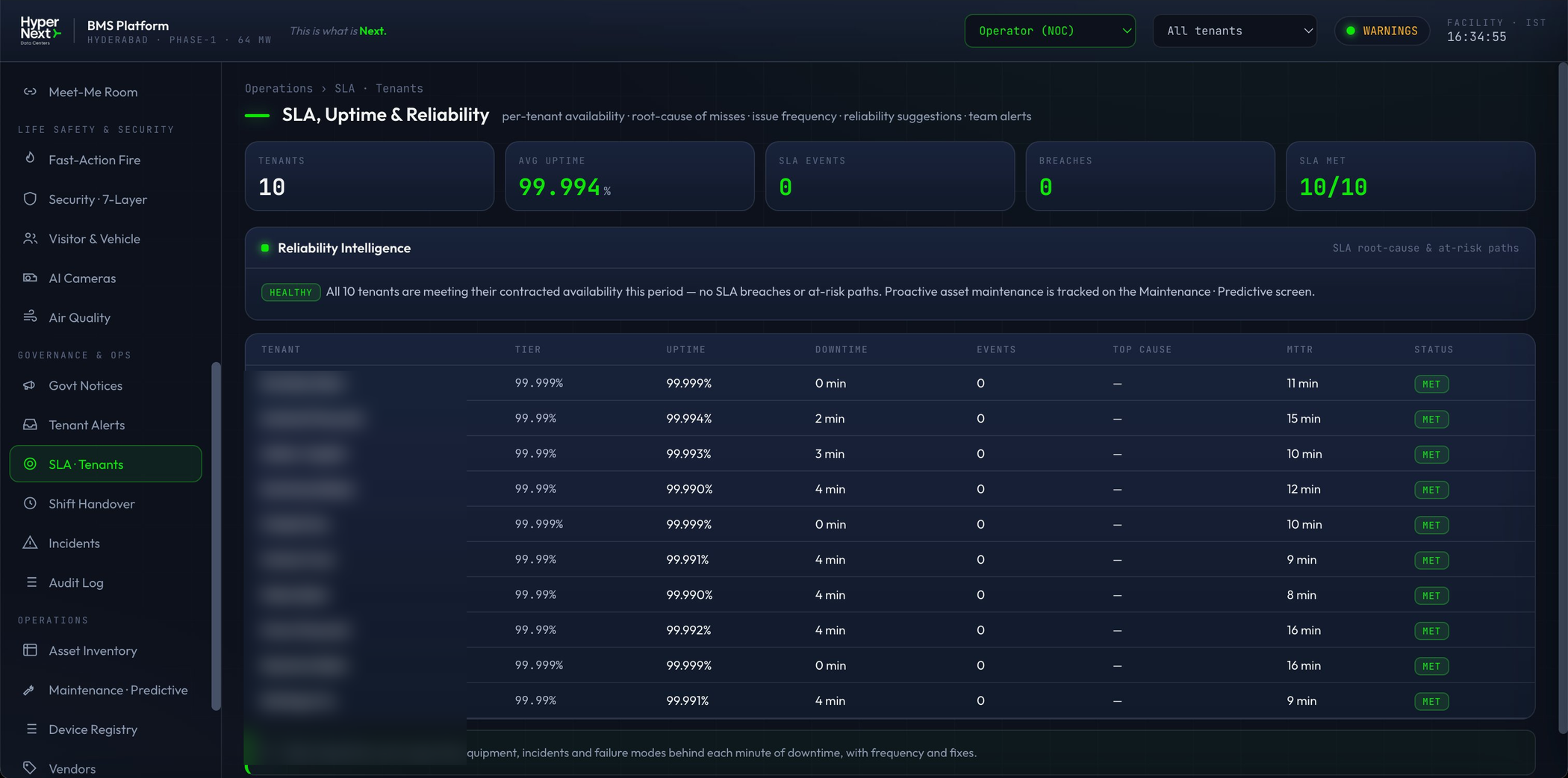
A view from the HyperNext BMS: per-tenant uptime, SLA events, reliability intelligence and root-cause, monitored around the clock from our NOC.
A partner network of global leaders.
From accelerated compute and rack systems to power conversion, cooling and standby generation, every layer is built with the leader in its field, not the lowest bid.








Net Zero
by 2030.
Net zero is a serious thing to claim, so we do not claim it lightly. Powered by 2.7 GW of captive renewable energy. Cooled by liquid, not aquifers. Built on an electrical architecture we patented because the alternatives, in this climate, do not hold up.
Cuts 6-12% of conversion loss compared to legacy AC distribution. Designed for the rack-scale GPU systems that need it.
Real-world design PUE across the operational year. Validated against Indian peak ambient temperatures of 40 to 45°C. Three granted patents underpin the electrical topology.
Liquid-cooled racks designed for 660 kW. The headroom is intentional. The platform scales as silicon density compounds, without retrofits.
Khavda Kutch solar park: 700 MW operational, 2 GW under planning. Plus a portfolio of partnership wind allocations across the corridor.
An attack now begins and ends faster than a human operator can read the first alert, so mitigation must be autonomous.
The window between vulnerability discovery and weaponisation has collapsed from months to hours.
Water positive is an arithmetic test, not a marketing claim. It is failed more often than it is passed.
India's installed AI training capacity in 2026 is a small fraction of the 2030 demand. The gap will not close itself.
At 600 kW per rack, air cooling stops being a design choice. It is a no-longer-available choice.
The economic unit of AI is the token. The cost per million tokens determines whether a product scales or stays premium.
The Building Management System is the operating system of a Tier IV AI data center. Treat it accordingly.
Data residency in India is one of three layers of sovereignty. It is necessary. It is not sufficient.
The 415VAC distribution path that worked for the 5-20 kW rack era is now a stranded asset.
A data center that takes more water than it returns is not sustainable. It is borrowed.