
Engineered here,
not bought off a shelf.
The hard parts of a data center are the ones worth building yourself. These are systems our engineers designed, prototyped and put on our own BMS, going into HN1 Phase 1 in Hyderabad. Notes from the bench, not a brochure.
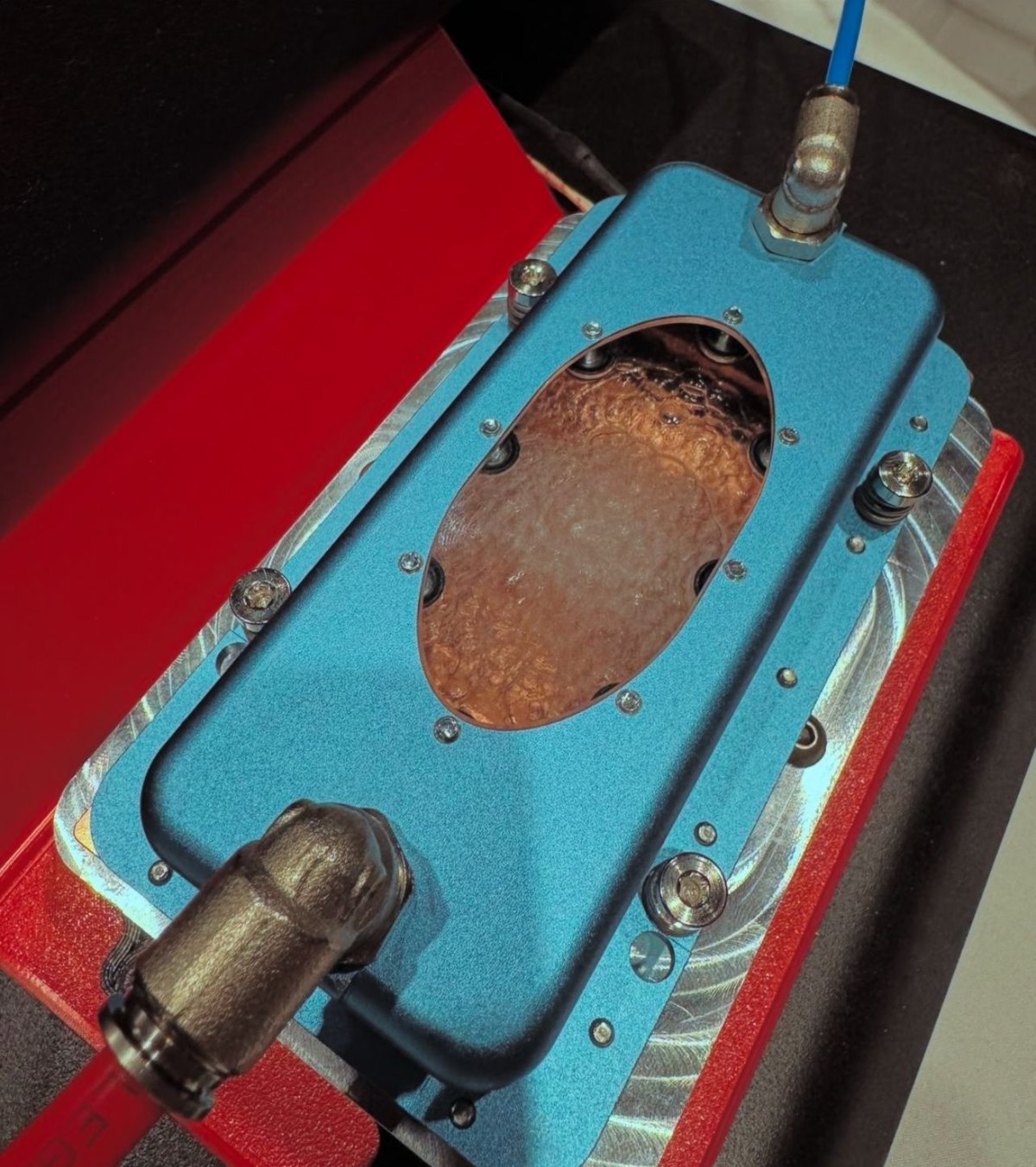
Direct-to-Chip Hybrid Cooling
Liquid where the heat is, air for the rest, and a compact sidecar exchanger instead of an expensive CDU. Cools 1400W chips, retrofits into servers you already own, up to 37% less cooling power.
Read it ›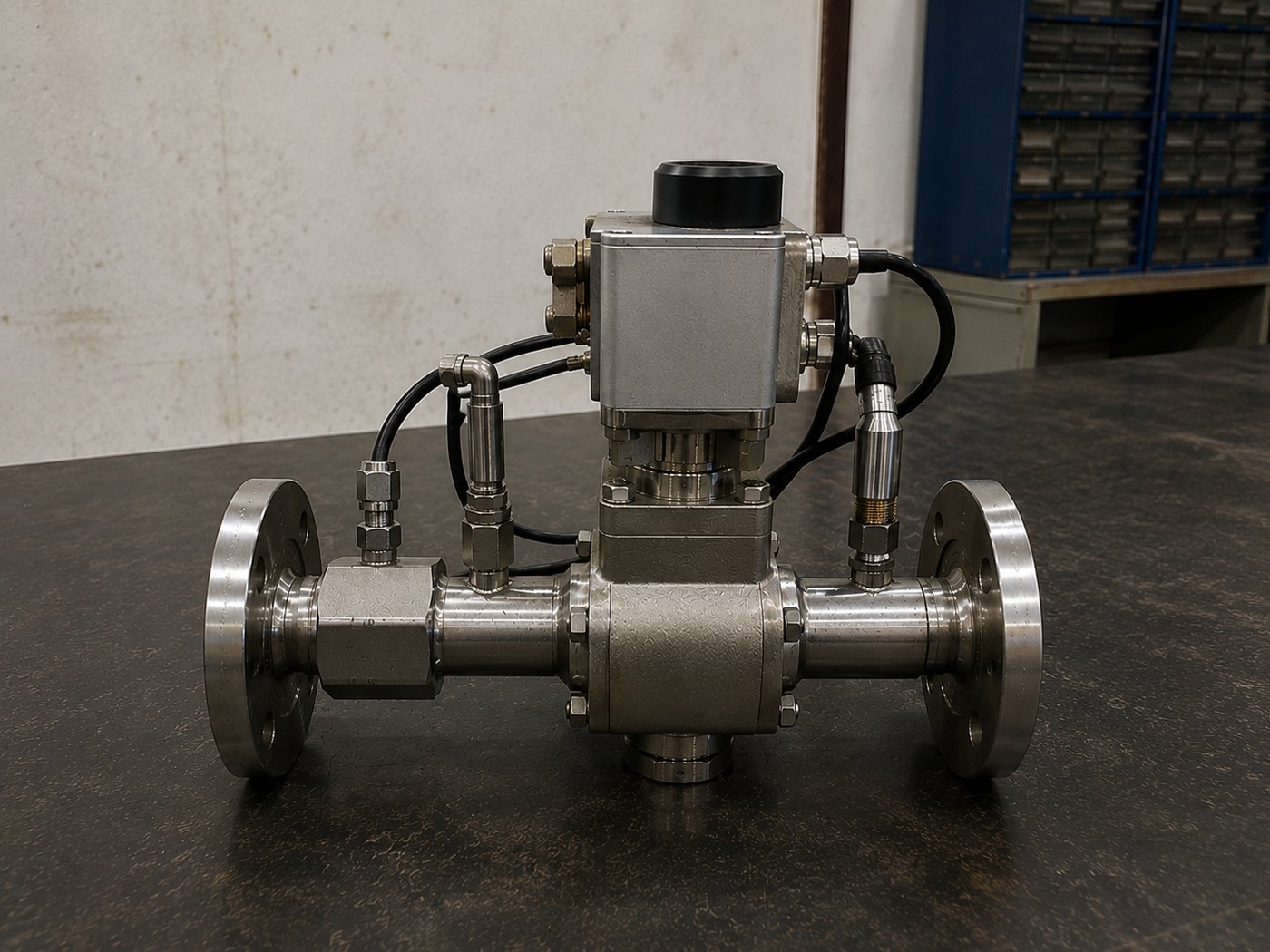
Inline Fluid Quality Valve
An inline valve that reads the dry-cooler coolant as it flows past and projects how many days of life it has left, so coolant is changed on condition, not on a calendar. Live on the BMS.
Read it ›The same instinct runs through the rest of the platform: an 800VDC power architecture, a vendor-agnostic BMS, and a sovereign cloud control plane, all built rather than bought. More of that engineering is on the TechnologyPlatform page.
Things we took out.
Things we built stronger.
Most of what makes a hall run cool, clean and dense is decided before any equipment arrives. These are the choices that shape HN1, and the reasons behind them.
MVSST: medium voltage straight to the rack
A medium-voltage solid-state transformer takes grid voltage down to rack voltage in a single stage. The conventional chain of transformer, switchgear, UPS, PDU and rack PSU is replaced by one conversion. Fewer stages means less heat to reject, fewer assets to maintain and fewer components sitting between the grid and the GPU.
No UPS hall, no battery rooms
With conversion collapsed into the MVSST and backup held at the rack, the central UPS hall and its rooms of batteries are never built. That removes the largest fire load in a conventional facility, along with its suppression, containment and insurance overhead.
Why it matters commercially: in a conventional facility, 55% of the grey space is taken by UPS rooms, battery racks, UPS plant and electrical panels. It is built, cooled, insured and maintained, and none of it can be leased. Removing that plant removes the space it stood in, and returns it to the part of the building that earns.
Fewer chillers, no cooling water
Direct-to-chip liquid takes the heat where it is made, so far less of the load ever reaches the air. Fewer chillers are installed, and a sealed glycol loop with dry coolers rejects heat without evaporating anything. There is no on-site cooling water consumption to reduce later, because none was designed in.
2,800 kg/m² floor loading
Rack-scale systems from NVIDIA and AMD are heavy, and the liquid distribution that serves them adds more. The slab is specified at 2,800 kg per square metre, the highest floor loading in India, so a Vera Rubin or AMD Helios rack can stand anywhere on the floor without local strengthening. Structure is the one thing that cannot be retrofitted, so it was decided first.
The greenest material
is the one never mined.
Most of a data centre's environmental cost is decided in procurement, not in operation. Two of the heaviest materials in a conventional facility are copper and lithium. This design needs far less copper, and none of the central lithium battery plant that normally holds the whole load. It is the first in India built that way.
Far less copper in the ground
Copper is sized by current, not by power. Raising the distribution voltage to 800V direct current carries the same megawatts at a fraction of the amperage, so conductors get thinner and shorter. MVSST removes whole runs of cable by taking medium voltage to the rack in one stage instead of stepping it down through switchgear, UPS and PDU. Less copper to buy, less to pull, less weight in the trays and less to recover at end of life.
Why it matters ecologically: copper is one of the most energy- and water-intensive metals to mine and refine, and demand for it is the single biggest materials constraint on global data centre build-out. Copper never specified is copper never extracted.
No lithium UPS in the core
A conventional facility holds its ride-through in halls of lithium-ion cells sized for the whole load, cooled, fire-suppressed, monitored and replaced on a cycle. With conversion collapsed into the MVSST, that central battery plant is never built. Lithium still exists in the building, inside servers and in the rack BBUs that ride out surges, and in ordinary office UPS. What disappears is the core plant, and that is where almost all of the mass sits.
Why it matters ecologically: lithium extraction is water-intensive and frequently sited in water-stressed regions, and the cells carry cobalt and nickel supply chains plus an end-of-life burden the industry has not solved. Not building the central plant avoids that at the scale where it counts, and takes the thermal-runaway fire load out of the building with it.
A first for India
Taken together, medium voltage direct to the rack, no central UPS, no lithium battery plant in the core, no on-site cooling water and none of the UPS, battery and panel space that normally takes 55% of a hall's grey space, is a combination no data centre in India has been built to before. Each decision removes a system rather than making one more efficient, and every system removed takes its materials, its cooling load, its maintenance and its disposal with it.
Put it to work.
If you want to talk about how these systems run inside an HN1 deployment, our engineers are happy to get into the detail.